source: http://www.philosophy.ox.ac.uk/news__events/news/philosophy_of_cosmology_-_new_field_of_study
John Templeton Foundation (who have a 'supernaturalistic' rather than a 'naturalistic' worldview) is sponsoring a group of philosophers and physicists in an area of study 'philosophy of cosmology'. I was surprised to see Brian Greene amongst the list of physicists receiving funds from Templeton.
The press release states:-
"Philosophy of Cosmology - new field of study
Oxford and Cambridge in partnership with US cluster to establish ‘Philosophy of Cosmology’ as a new field of study. Templeton grant funds initiative at top universities in philosophy
In a new partnership between Oxford and Cambridge, researchers in physics and philosophy Simon Saunders, Joe Silk, and David Wallace at Oxford University, and John Barrow and Jeremy Butterfield at Cambridge, are to join researchers at a cluster of US universities including Columbia University, Yale University, and New York University, to establish the field of philosophy of cosmology as a new branch of philosophy of physics.
The initiative, funded by the John Templeton Foundation, is of three years in duration and will culminate in a major international conference. The enduring impact of the project will be to isolate and clarify the outstanding conceptual problems in the foundations of cosmology, to seed and stimulate future research in the subject, and to define philosophy of cosmology as a new field in its own right, with its own distinctive problems and motivations.
Chief among them, according to Simon Saunders of Oxford University, ‘is the problem of how to compensate for selection effects – of making sense of the so-called ‘anthropic principle’. Even if we knew the structure of the universe, the whole story from beginning to end, what should we expect to see from our particular corner of it? What are the probabilities? And of course that’s what’s relevant to experiments.’ The problem isn’t restricted to the distribution of stars or galaxies; it could extend to the values of supposedly fundamental constants, such as the cosmological constant --- or dark energy, as it is known.
"Explaining the value of the cosmological constant is one of the most critical problems in theoretical physics" says John Barrow, whose book The Anthropic Cosmological Principle, co-written with Frank Tipler, set the agenda for anthropic reasoning in cosmology the last two decades. “This problem goes deeper than merely describing the accelerated expansion of the universe: it requires an understanding of the vacuum, how the quantum nature of reality impacts on the universe as a whole, and what probability means when used to evaluate observed properties of the universe.”
The initiative is being made now in part because cosmology has in recent years turned into a spectacularly successful empirical discipline. But there is another reason too. “One of the key obstacles to progress in understanding the universe as a whole – particularly the early universe -- is the lack of a realist understanding of quantum theory”, says Saunders. “There are different aspects to the realism problem. One of them is about the nature of reality at the microscopic level; another is about how to apply quantum theory to systems ‘from the inside’ – to so-called closed systems. The latter is called the measurement problem. The universe as a whole is closed in this sense.” How then is it possible to apply quantum theory to cosmology – to obtain a genuinely quantum cosmology? “There has been real progress on that front in the last twenty years” Saunders continues. “That’s where our group and the East Coast group has an edge. We are interested in exploring these questions in quantum theories that are free of the measurement problem. Physicists try to be neutral on these questions, but it’s hard to do that and make sense of quantum cosmology”.
A major component of the Oxford-Cambridge project, like that of the US cluster led by Barry Loewer at Rutgers University, is to establish a community of scholars able to engage with such foundational questions in cosmology. To that end Joe Silk at Oxford, and John Barrow at Cambridge, will host a series of lecture courses, to be given by eminent figures in cosmology. These will be filmed and archived on a website dedicated to providing research materials and teaching resources in cosmology. Another component is related to the ‘PLUS’ e-magazine, associated with the Millennium Mathematics Project at Cambridge University, which will house a series of interviews with leaders in cosmology on key questions in foundations. The three-year project will culminate in a major international conference, and the publication of a volume of papers devoted to the philosophy of cosmology.
The US cluster includes Columbia University, Yale University, New York University, and the University of California at Santa Cruz. It encompasses nine scholars: Barry Loewer, Dean Zimmerman, Sheldon Goldstein and Roderich Tumulka of Rutgers; David Albert and Brian Greene of Columbia, Tim Maudlin of New York University, Priya Natarajan of Yale, and Joel Primack of the University of California, Santa Cruz. Loewer, Zimmerman, Albert and Maudlin are philosophers; Goldstein and Tumulka, mathematicians; Greene, Natarajan, and Primack, physicists. The US cluster, like the Oxford-Cambridge partnership, is funded by a $960,000 grant from the John Templeton Foundation."

Showing posts with label John Templeton Foundation. Show all posts
Showing posts with label John Templeton Foundation. Show all posts
Thursday, May 10, 2012

Monday, March 16, 2009
Physicist wins £1m Templeton gong
source: http://news.bbc.co.uk/1/hi/sci/tech/7946092.stm
http://www.newscientist.com/article/dn16769-concept-of-hypercosmic-god-wins-templeton-prize.html?DCMP=OTC-rss&nsref=online-news
Professor d'Espagnat, 87, worked with great luminaries of quantum physics but went on to address the philosophical questions that the field poses.
The award will be officially presented by the Duke of Edinburgh on 5 May.
The prize is consistently the largest annual award given to an individual.
A professor emeritus from University of Paris Sud, d'Espagnat told BBC News that he would use one-third of the prize money to fund the kind of research he has pursued, and will donate a further third to charity.
Grounded
The Templeton Foundation award is largely designed to honour work that finds a common ground between science and religion, with the award going more often to scientists than theologians or philosophers.
While Professor d'Espagnat's work is not explicitly religious, he aims to delineate what science cannot definitively rule out.
His concept of an ultimate reality - as he terms it, "the ground of things" - is only glimpsed, not explicitly described, by science.
Science, he said, "is aimed not at describing 'reality as it really is' but at predicting what will be observed in such-and-such circumstances".
"What science really teaches us is that it's not with ordinary concepts that we shall ever reach 'the ground of things'," he added.
The spiritual, he argues, cannot be ruled out by scientific endeavour. However, for him, the existence of something inexplicable does not create an uncomfortable sense of mystery.
http://www.newscientist.com/article/dn16769-concept-of-hypercosmic-god-wins-templeton-prize.html?DCMP=OTC-rss&nsref=online-news
HASSNERS.org highlights
HASSNERS.org comments
 d'Espagnat is troubled by the scant attention paid to philosophy of physics |
Bernard d'Espagnat, a French physicist and philosopher, has won the annual Templeton Prize with a purse of £1m.
The prize honours "an exceptional contribution to affirming life's spiritual dimension" and has been awarded to scientists and theologians.Professor d'Espagnat, 87, worked with great luminaries of quantum physics but went on to address the philosophical questions that the field poses.
The award will be officially presented by the Duke of Edinburgh on 5 May.
The prize is consistently the largest annual award given to an individual.
A professor emeritus from University of Paris Sud, d'Espagnat told BBC News that he would use one-third of the prize money to fund the kind of research he has pursued, and will donate a further third to charity.
Grounded
The Templeton Foundation award is largely designed to honour work that finds a common ground between science and religion, with the award going more often to scientists than theologians or philosophers.
Professor d'Espagnat's scientific pedigree put him at the centre of the growth of quantum mechanics, working with Nobel laureates in the field including Enrico Fermi and Niels Bohr.
But he was troubled by how little the field was addressing the philosophical questions raised by the theory - which for the first time suggested that experiments were not measuring an absolute reality and that the experimenter could influence the result.
While Professor d'Espagnat's work is not explicitly religious, he aims to delineate what science cannot definitively rule out.
 |  Mystery is not something negative that has to be eliminated  Bernard d'Espagnat |
Science, he said, "is aimed not at describing 'reality as it really is' but at predicting what will be observed in such-and-such circumstances".
"What science really teaches us is that it's not with ordinary concepts that we shall ever reach 'the ground of things'," he added.
The spiritual, he argues, cannot be ruled out by scientific endeavour. However, for him, the existence of something inexplicable does not create an uncomfortable sense of mystery.
"Mystery is not something negative that has to be eliminated," he said. "On the contrary, it is one of the constitutive elements of being."From New Scientist: http://www.newscientist.com/article/dn16769-concept-of-hypercosmic-god-wins-templeton-prize.html?DCMP=OTC-rss&nsref=online-news
Concept of 'hypercosmic God' wins Templeton Prize
- 11:08 16 March 2009 by Amanda Gefter
- For similar stories, visit the Quantum World Topic Guide
Today the John Templeton Foundation announced the winner of the annual Templeton Prize of a colossal £1 million ($1.4 million), the largest annual prize in the world.
This year it goes to French physicist and philosopher of science Bernard d'Espagnat for his "studies into the concept of reality". D'Espagnat, 87, is a professor emeritus of theoretical physics at the University of Paris-Sud, and is known for his work on quantum mechanics. The award will be presented to him by the Duke of Edinburgh at Buckingham Palace on 5 May.
D'Espagnat boasts an impressive scientific pedigree, having worked with Nobel laureates Louis de Broglie, Enrico Fermi and Niels Bohr. De Broglie was his thesis advisor; he served as a research assistant to Fermi; and he worked at CERN when it was still in Copenhagen under the direction of Bohr. He also served as a visiting professor at the University of Texas, Austin, at the invitation of the legendary physicist John Wheeler.
But what has he done that's worth £1 million?
The thrust of d'Espagnat's work was on experimental tests of Bell's theorem. The theorem states that either quantum mechanics is a complete description of the world or that if there is some reality beneath quantum mechanics, it must be nonlocal – that is, things can influence one another instantaneously regardless of how much space stretches between them, violating Einstein's insistence that nothing can travel faster than the speed of light.
But what d'Espagnat was really interested in was what all of this meant for discerning the true nature of ultimate reality. Unlike most of his contemporaries, d'Espagnat was one of the brave ones unafraid to tackle the thorny and profound philosophical questions posed by quantum physics.
Looking back at d'Espagnat's work, I couldn't help but wonder what the Templeton Foundation – an organisation dedicated to reconciling science and religion – saw in it that they thought was worth a £1 million.
Then, scanning the press release, I found it:
"There must exist, beyond mere appearances … a 'veiled reality' that science does not describe but only glimpses uncertainly. In turn, contrary to those who claim that matter is the only reality, the possibility that other means, including spirituality, may also provide a window on ultimate reality cannot be ruled out, even by cogent scientific arguments."
But even if there is a partially unknowable reality beneath reality, I'm not sure how that implies that spirituality is a viable means to access it. I have a suspicion that this still comes down to good old-fashioned faith.
"Independent Reality plays, in a way, the role of God – or 'Substance' – of Spinoza," d'Espagnat writes. Einstein believed in Spinoza's God, which he equated with nature itself, but he always held this "God" to be entirely knowable.
D'Espagnat's veiled God, on the other hand, is partially – but still fundamentally – unknowable. And for precisely this reason, it would be nonsensical to paint it with the figure of a personal God or attribute to it specific concerns or commandments.
The "veiled reality", then, can in no way help Christians or Muslims or Jews or anyone else rationalise their specific beliefs. The Templeton Foundation – despite being headed up by John Templeton Jr, an evangelical Christian – claims to afford no bias to any particular religion, and by awarding their prize to d'Espagnat, I think they've proven that to be true.
I happen to believe that drawing any spiritual conclusions from quantum mechanics is an unfounded leap in logic – but if someone out there in the world is willing to pay someone £1 million for pondering the nature of reality, that's a world I'm happy to live in.
This year it goes to French physicist and philosopher of science Bernard d'Espagnat for his "studies into the concept of reality". D'Espagnat, 87, is a professor emeritus of theoretical physics at the University of Paris-Sud, and is known for his work on quantum mechanics. The award will be presented to him by the Duke of Edinburgh at Buckingham Palace on 5 May.
D'Espagnat boasts an impressive scientific pedigree, having worked with Nobel laureates Louis de Broglie, Enrico Fermi and Niels Bohr. De Broglie was his thesis advisor; he served as a research assistant to Fermi; and he worked at CERN when it was still in Copenhagen under the direction of Bohr. He also served as a visiting professor at the University of Texas, Austin, at the invitation of the legendary physicist John Wheeler.
But what has he done that's worth £1 million?
The thrust of d'Espagnat's work was on experimental tests of Bell's theorem. The theorem states that either quantum mechanics is a complete description of the world or that if there is some reality beneath quantum mechanics, it must be nonlocal – that is, things can influence one another instantaneously regardless of how much space stretches between them, violating Einstein's insistence that nothing can travel faster than the speed of light.
But what d'Espagnat was really interested in was what all of this meant for discerning the true nature of ultimate reality. Unlike most of his contemporaries, d'Espagnat was one of the brave ones unafraid to tackle the thorny and profound philosophical questions posed by quantum physics.
Third view
Unlike classical physics, d'Espagnat explained, quantum mechanics cannot describe the world as it really is, it can merely make predictions for the outcomes of our observations. If we want to believe, as Einstein did, that there is a reality independent of our observations, then this reality can either be knowable, unknowable or veiled. D'Espagnat subscribes to the third view. Through science, he says, we can glimpse some basic structures of the reality beneath the veil, but much of it remains an infinite, eternal mystery.Looking back at d'Espagnat's work, I couldn't help but wonder what the Templeton Foundation – an organisation dedicated to reconciling science and religion – saw in it that they thought was worth a £1 million.
Then, scanning the press release, I found it:
"There must exist, beyond mere appearances … a 'veiled reality' that science does not describe but only glimpses uncertainly. In turn, contrary to those who claim that matter is the only reality, the possibility that other means, including spirituality, may also provide a window on ultimate reality cannot be ruled out, even by cogent scientific arguments."
But even if there is a partially unknowable reality beneath reality, I'm not sure how that implies that spirituality is a viable means to access it. I have a suspicion that this still comes down to good old-fashioned faith.
Unconventional 'God'
So what is it, really, that is veiled? At times d'Espagnat calls it a Being or Independent Reality or even "a great, hypercosmic God". It is a holistic, non-material realm that lies outside of space and time, but upon which we impose the categories of space and time and localisation via the mysterious Kantian categories of our minds."Independent Reality plays, in a way, the role of God – or 'Substance' – of Spinoza," d'Espagnat writes. Einstein believed in Spinoza's God, which he equated with nature itself, but he always held this "God" to be entirely knowable.
D'Espagnat's veiled God, on the other hand, is partially – but still fundamentally – unknowable. And for precisely this reason, it would be nonsensical to paint it with the figure of a personal God or attribute to it specific concerns or commandments.
The "veiled reality", then, can in no way help Christians or Muslims or Jews or anyone else rationalise their specific beliefs. The Templeton Foundation – despite being headed up by John Templeton Jr, an evangelical Christian – claims to afford no bias to any particular religion, and by awarding their prize to d'Espagnat, I think they've proven that to be true.
I happen to believe that drawing any spiritual conclusions from quantum mechanics is an unfounded leap in logic – but if someone out there in the world is willing to pay someone £1 million for pondering the nature of reality, that's a world I'm happy to live in.
Saturday, November 29, 2008
Do children believe because they're told to by adults?
The research is funded by the Templeton Foundation, an organisation keen to find, or to insert, religion into science and to promote belief in their compatibility – which, note, comes down to spending money on "showing" in the end that the beliefs of ancient goatherds are as good as modern physics.
Justin Barrett, a Christian and member of the centre's research team (whether it is research or propaganda is the moot question here) says with his colleagues on the centre's website:
Why is belief in supernatural beings so common? Because of the design of human minds. Human minds, under normal developmental conditions, have a strong receptivity to belief in gods, in the afterlife, in moral absolutes, and in other ideas commonly associated with 'religion' … In a real sense, religiousness is the natural state of affairs. Unbelief is relatively unusual and unnatural.
This claim was the subject of Barrett's lecture at Cambridge, in which he exhibited his reasons for thinking that children are innately disposed to believe in intelligent design/creationism and a supreme being. His real reasons for thinking this, of course, are that he is a man of faith funded by a faith-based organisation; but the reasons he professed were that children have an innate tendency when small to interpret what happens in the world to be the outcome of purposive agency.
(source: AC Grayling in The Guardian and reposted in HASSERS)Out of the mouths of babes
Do children believe because they're told to by adults? The evidence suggests otherwise.
-

- guardian.co.uk, Tuesday November 25 2008 08.00 GMT
Why do the majority of people – across cultures and throughout history – believe in gods?
One way to address this question is to look at why it is that children acquire beliefs in gods. If an idea cannot be easily learned by children then it is relatively unlikely to survive into the next generation and will die out. So if we can explain why children are so ready to believe in gods, we will be a big step closer in understanding religious beliefs more generally. It may seem that the answer is simple: indoctrination.
Children believe because their parents or other adults teach them, right? Unfortunately, the story is not that simple.Fortunately, it is far more interesting.
Children will believe a lot of what their parents teach them, but not everything. Try to convince a child that a tarantula is harmless, that broccoli is a better food for them than crisps, or that Paul McCartney is a better musician than Miley Cyrus and you'll likely get nowhere. Likewise, teachers have difficulty teaching many scientific insights such as evolution by natural selection or that solid objects such as tables are composed almost entirely of space.
Children learn things that their minds are tuned to learn more readily than things that go against that natural tuning.
Developmental psychologists have provided evidence that children are naturally tuned to believe in gods of one sort or another.
• Children tend to see natural objects as designed or purposeful in ways that go beyond what their parents teach, as Deborah Kelemen has demonstrated. Rivers exist so that we can go fishing on them, and birds are here to look pretty.
• Children doubt that impersonal processes can create order or purpose. Studies with children show that they expect that someone not something is behind natural order. No wonder that Margaret Evans found that children younger than 10 favoured creationist accounts of the origins of animals over evolutionary accounts even when their parents and teachers endorsed evolution. Authorities' testimony didn't carry enough weight to over-ride a natural tendency.
• Children know humans are not behind the order so the idea of a creating god (or gods) makes sense to them. Children just need adults to specify which one.
• Experimental evidence, including cross-cultural studies, suggests that three-year-olds attribute super, god-like qualities to lots of different beings. Super-power, super-knowledge and super-perception seem to be default assumptions. Children then have to learn that mother is fallible, and dad is not all powerful, and that people will die. So children may be particularly receptive to the idea of a super creator-god. It fits their predilections.
• Recent research by Paul Bloom, Jesse Bering, and Emma Cohen suggests that children may also be predisposed to believe in a soul that persists beyond death.
That belief comes so naturally to children may sound like an attack on religious belief (belief in gods is just leftover childishness) or a promotion of religious belief (God has implanted a seed for belief in children). What both sides should agree upon is the scientific evidence: certainly cultural inputs help fill in the details but children's minds are not a level playing field. They are tilted in the direction of belief.
Justin L Barrett will discuss his research today at the Faraday Institute for Science and Religion seminar, "Born Believers: the Naturalness of Childhood Theism" at St Edmund's College, University of Cambridge
Friday, November 28, 2008
Children of God? Religion is not hardwired
source: http://www.guardian.co.uk/commentisfree/2008/nov/28/religion-children-innateness-barrett
There's no real evidence to suggest that religion is hardwired – it's just wishful thinking on the part of religious academics
-
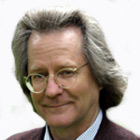
- guardian.co.uk, Friday November 28 2008 11.30 GMT
Earlier this week I had occasion to debate – if the soundbite culture of radio news permits that description – with a member of Oxford University's Centre for Anthropology and Mind the "findings" of its cognition, religion and theology project, to the effect that children are hardwired to believe in a "supreme being". The research is funded by the Templeton Foundation, an organisation keen to find, or to insert, religion into science and to promote belief in their compatibility – which, note, comes down to spending money on "showing" in the end that the beliefs of ancient goatherds are as good as modern physics.
Justin Barrett, a Christian and member of the centre's research team (whether it is research or propaganda is the moot question here) says with his colleagues on the centre's website:
Why is belief in supernatural beings so common? Because of the design of human minds. Human minds, under normal developmental conditions, have a strong receptivity to belief in gods, in the afterlife, in moral absolutes, and in other ideas commonly associated with 'religion' … In a real sense, religiousness is the natural state of affairs. Unbelief is relatively unusual and unnatural.
This claim was the subject of Barrett's lecture at Cambridge, in which he exhibited his reasons for thinking that children are innately disposed to believe in intelligent design/creationism and a supreme being. His real reasons for thinking this, of course, are that he is a man of faith funded by a faith-based organisation; but the reasons he professed were that children have an innate tendency when small to interpret what happens in the world to be the outcome of purposive agency.
Now on this point he and I, an atheist funded by no organisation keen on promoting atheism, agree. Children's earliest experiences are of purposive agency in the adults and other people around them – these being the entities of most interest to them in their first months – and for good evolutionary reasons they are extremely credulous, not only believing that things must be acting as their parents do in being self-moving and intentional, but also believing in tooth fairies, Father Christmas, and a host of other things beside, almost all of which they give up believing before puberty, unless the beliefs are socially reinforced – as with religious and, to a lesser extent, certain other superstitious beliefs. Intellectual maturation is the process in important part of weaning oneself from the assumption that trees and shadows behave as they do for the same reason that one's parents, other humans, and dogs and cats do; it is every bit as natural a fact about children that they cease to apply intentionalistic explanations to everything as that they give them to everything, on the model of their parents' behaviour, in the earliest phases of development.
But Barrett and friends infer from the first half of these unexceptionable facts that children are hardwired to believe in a supreme being. Not only does this ignore the evidence from developmental psychology about the second stage of cognitive maturation, but is in itself a very big – and obviously hopeful – jump indeed. Moreover it ignores the fact that large tracts of humankind (the Chinese for a numerous example) have no beliefs in a supreme being, innate or learned, and that most primitive religion is animistic, a simple extension of the agency-imputing explanation which gives each tree its dryad and each stream its nymph, no supreme beings required.
Barrett and friends say that children are hardwired to believe that nature is designed. This Barrett infers, apparently, from asking small children such questions as "why is this stone pointed?" It does not seem to have occurred to him that the semantics of "why" questions are such that they demand an explanation in terms of reasons or causes in response – the language game is constrained to that pattern: "why is/did?" prompts an automatic "because" – and that even small children know that "just because it is" does not count as satisfactory. So of course, from the limited resources they have in which reasons are vastly more familiar than causes (the causes that natural science later most fully discerns by investigation), they come up with what they know the questioner wishes to hear – an explanation – but in the absence of knowing very much about causes, they give it in intentionalistic terms. A small child might know why something might be made sharp, and for what sort of purpose, but not as readily how it might become so, especially if it is a natural object. All that this shows, therefore, is that the question was ineptly framed, not that the Templeton Foundation has proved that religious belief is innate.
"Religious belief" and early childhood interpretations of how the world work are so far removed from one another that only a preconceived desire to interpret the latter in terms of "intelligent design" and "a supreme being" – the very terms are a giveaway – is obviously tendentious, and this is what is going on here. It would merely be poor stuff if that was all there is to it; but there is more. The Templeton Foundation is rich; it offers a very large money prize to any scientist or philosopher who will say things friendly to religion, and it supports "research" as described above into anything that will add credibility and respectability to religion. Its website portrays its aims as serious and objective, but in truth it is just another example of how well-funded and well-organised some religious lobbies are – a common phenomenon in the United States in particular, and now infecting the body politic here.
But the Templeton Foundation would do better to be frank about its propagandistic intentions, for while it tries to dress itself in the lineaments of objectivity it will always face the accusation of tainting the pool, as with the work of this Oxford University institute.
Indeed I question the advisability of Oxford taking funds from the Templeton Foundation for this kind of work. I wonder whether it has undertaken due diligence on this one. I hope it would not take money supporting research for astrology, Tarot divination, proof that the Olympian deities still exist, and the like. The general claims of religion differ not one jot in intellectual respects – or respectability – from these. Perhaps it should think again.
Friday, August 29, 2008
Atheism could be science's contribution to religion
by Matthew Cobb, Jerry Conye
Reposted from:
http://www.nature.com/nature/journal/v454/n7208/full/4541049d.html
A letter to Nature.
Nature 454, 1049. 28 Aug 2008
SIR — We were perplexed by your Editorial on the work of the Templeton Foundation ('Templeton's legacy' Nature 454, 253–254; 2008). Surely science is about finding material explanations of the world — explanations that can inspire those spooky feelings of awe, wonder and reverence in the hyper-evolved human brain. Religion, on the other hand, is about humans thinking that awe, wonder and reverence are the clue to understanding a God-built Universe. (The same is true of religion's poor cousin, 'spirituality', which you slip into your Editorial rather as a creationist uses 'intelligent design'.) There is a fundamental conflict here, one that can never be reconciled until all religions cease making claims about the nature of reality. The scientific study of religion is indeed full of big questions that need to be addressed, such as why belief in religion is negatively correlated with an acceptance of evolution. One could consider psychological studies of why humans are superstitious and believe impossible things, and comparative sociological studies of religion using materialist explanations of the rise and fall of the world's belief systems. Perhaps the Templeton Foundation is thinking of funding such research. The outcome of such work, we predict, will not bring science and religion (or 'spirituality') any closer to one another. You suggest that science may bring about "advances in theological thinking". In reality, the only contribution that science can make to the ideas of religion is atheism.
Matthew Cobb Faculty of Life Sciences, University of Manchester, Oxford Road, Manchester M13 9PL, UK e-mail: cobb@manchester.ac.uk
Jerry Coyne Department of Ecology and Evolution, The University of Chicago, Chicago, Illinois 60637, USA
4. Comment #238293 by SteveN on August 28, 2008 at 12:16 am
For those of you without access to Nature, here is the original editorial to which the letter above is replying:
When a wealthy individual seeks to leave a legacy through scientific philanthropy, researchers usually greet such generosity enthusiastically. But the death of investment mogul John Templeton marks an unusual, and notable, exception. At the time of his passing last week, Templeton had poured some US$1.5 billion into the John Templeton Foundation, which funds research at the intersection of science and spirituality. Critics have maintained that the foundation needlessly conflates science and faith, with some calling for an outright boycott of Templeton funding.
Templeton was a deeply spiritual, albeit unorthodox, individual (see page 290). He lived a life firmly rooted in the Christian traditions of modesty and charity. Yet he was also a great admirer of science, the undogmatic practice of which he believed led to intellectual humility. His love of science and his God led him to form his foundation in 1987 on the basis that a mutual dialogue might enrich the understanding of both.
This publication would turn away from religion in seeking explanations for how the world works, and believes that science is likely to go further in explaining human moral impulses than some religious people will welcome. Thus it shares a degree of suspicion with many in the scientific community at any attempt by religiously driven organizations to fund science. A chief concern is that the influential Templeton Foundation might be seeking to inject religion into the scientific world. And it is easy to understand that concern given the political activism of many American fundamentalists and their efforts to promote ideas such as intelligent design, which posits a divine hand in evolution. The foundation's most vigorous critics accuse it of attempting to lace science with spiritualism.
That claim is somewhat ironic, as Templeton himself seemed to have just the opposite in mind. He believed institutional religion to be antiquated, and hoped a dialogue with researchers might bring about advances in theological thinking. The foundation's substantial funding of science and religion departments around the world is directed towards those ends. Theologians have also used foundation money to develop and promote arguments that reconcile some of the apparent contradictions between science and religion. For those many scientists with a faith, promoting the compatibility of science with faith is a prudent and even necessary goal. Strict atheists may deplore such activities, but they can happily ignore them too.
The foundation's scientific agenda addresses 'big questions', which has sometimes resulted in work that many researchers regard as scientifically marginal. One field popular with the foundation is positive psychology, which seeks to gauge the effects of positive thinking on patients, and which critics argue has yielded little. Also heavily supported are cosmological studies into the existence of multiple universes -- a notion frequently criticized for lying at the edge of falsifiability. The concern is that such research has been unduly elevated by the foundation's backing. But whatever one thinks of positive psychology and the like, the foundation's support has not taken anything away from conventional funding. And in the field of cosmology at least, it has arguably yielded some new and interesting ideas.
The foundation's management now falls chiefly to Templeton's son, John M. Templeton Jr, whose Christian beliefs are reportedly much more conventional than his father's. A critical scrutiny of the foundation's scientific influence continues to be warranted, and no scientific organization should accept sums of money so large that its mission could be perceived as being swayed by religious or spiritual considerations. But critics' total opposition to the Templeton Foundation's unusual mix of science and spirituality is unwarranted.
Monday, May 05, 2008
Does science make belief in God obsolete? Part 3: Yes, if by ... says Stephen Pinker

Yes,
if by "science" we mean the entire enterprise of secular reason and knowledge (including history and philosophy),not just people with test tubes and white lab coats.
Traditionally, a belief in God was attractive because it promised to explain the deepest puzzles about origins. Where did the world come from? What is the basis of life? How can the mind arise from the body? Why should anyone be moral?
Yet over the millennia, there has been an inexorable trend:
the deeper we probe these questions, and the more we learn about the world in which we live, the less reason there is to believe in God.
Start with the origin of the world. Today no honest and informed person can maintain that the universe came into being a few thousand years ago and assumed its current form in six days (to say nothing of absurdities like day and night existing before the sun was created).
Nor is there a more abstract role for God to play as the ultimate first cause. This trick simply replaces the puzzle of "Where did the universe come from?" with the equivalent puzzle "Where did God come from?"
What about the fantastic diversity of life and its ubiquitous signs of design? At one time it was understandable to appeal to a divine designer to explain it all. No longer. Charles Darwin and Alfred Russel Wallace showed how the complexity of life could arise from the physical process of natural selection among replicators, and then Watson and Crick showed how replication itself could be understood in physical terms. Notwithstanding creationist propaganda,
the evidence for evolution is overwhelming, including our DNA, the fossil record, the distribution of life on earth, and our own anatomy and physiology(such as the goose bumps that try to fluff up long-vanished fur).
For many people the human soul feels like a divine spark within us. But neuroscience has shown that our intelligence and emotions consist of intricate patterns of activity in the trillions of connections in our brain.True, scholars disagree on how to explain the existence of inner experience—some say it's a pseudo-problem, others believe it's just an open scientific problem, while still others think that it shows a limitation of human cognition (like our inability to visualize four-dimensional space-time). But even here, relabeling the problem with the word "soul" adds nothing to our understanding.
People used to think that biology could not explain why we have a conscience. But the human moral sense can be studied like any other mental faculty, such as thirst, color vision, or fear of heights. Evolutionary psychology and cognitive neuroscience are showing how our moral intuitions work, why they evolved, and how they are implemented within the brain.
This leaves morality itself—the benchmarks that allow us to criticize and improve our moral intuitions. It is true that science in the narrow sense cannot show what is right or wrong. But neither can appeals to God.
It's not just that the traditional Judeo-Christian God endorsed genocide, slavery, rape, and the death penalty for trivial insults. It's that morality cannot be grounded in divine decree, not even in principle. Why did God deem some acts moral and others immoral? If he had no reason but divine whim, why should we take his commandments seriously? If he did have reasons, then why not appeal to those reasons directly?
The Golden Rule.
Those reasons are not to be found in empirical science, but they are to be found in the nature of rationality as it is exercised by any intelligent social species.
The essence of morality is the interchangeability of perspectives: the fact that as soon as I appeal to you to treat me in a certain way (to help me when I am in need, or not to hurt me for no reason), I have to be willing to apply the same standards to how I treat you, if I want you to take me seriously. That is the only policy that is logically consistent and leaves both of us better off. And God plays no role in it.
For all these reasons, it's no coincidence that Western democracies have experienced three sweeping trends during the past few centuries: barbaric practices (such as slavery, sadistic criminal punishment, and the mistreatment of children) have decreased significantly; scientific and scholarly understanding has increased exponentially; and belief in God has waned.
Science, in the broadest sense, is making belief in God obsolete, and we are the better for it.
Does science make belief in God obsolete? Part 2: Yes says Victor Stenger
Templeton Foundation posed the question. Does science make belief in God obsolete?
link via http://richarddawkins.net/article,2511,n,n
Once upon a time there were a number of strong scientific arguments for the existence of God. One of the oldest and most prevalent is the argument from design. Most people look at the complexity of the world and cannot conceive of how it could have come about except by the action of a being or force of great power and intelligence.
The design argument received perhaps its most brilliant exposition in the work of the Anglican archdeacon William Paley.
In his Natural Theology, or Evidences of the Existence and Attributes of the Deity Collected from the Appearance of Nature, first published in 1802, Paley wrote about finding both a stone and a watch while crossing a heath. Though the stone would be regarded as a simple part of nature, no one would question that the watch is an artifact, designed for the purpose of telling time. Paley then proposed that objects of nature, such as the human eye, give every indication of being similar contrivances.
When Charles Darwin entered Cambridge in 1827 he was assigned to the same rooms in Christ's College occupied by William Paley seventy years earlier. By that time the syllabus included the study of Paley's works, and Darwin was deeply impressed. He remarked that Paley's work "gave me as much delight as did Euclid."
Yet Darwin ultimately discovered the answer to Paley and showed how complex systems can evolve naturally from simpler ones without design or plan. The mechanism he proposed in 1859 in The Origin of Species (inferred independently by Alfred Russel Wallace) was natural selection, by which organisms accumulate changes that enable them to survive and have progeny that maintain those features.
But, as Darwin recognized, a serious objection to evolution existed based on the known physics of the time. Calculations by the great physicist William Thomson (Lord Kelvin) estimated ages for the sun that were far too short for natural selection to operate. However, at the time, nuclear energy was unknown. When this new form of energy was discovered early in the twentieth century, physicists estimated that the energy released by nuclear reactions would allow the sun and other stars to last billions of years as stable energy sources.
Prior to the twentieth century, the simple fact that the universe contains matter also provided strong evidence for a creation. At the time it was believed that matter was conserved, and so the matter of the universe had to come from somewhere. In 1905 Einstein showed that matter could be created from energy. But where did that energy come from?
This remained unanswered for almost another century until
But in 1929, astronomer Edwin Hubble reported that the galaxies were moving away from one another at speeds approximately proportional to their distance, indicating that the universe was expanding. This provided the earliest evidence for the Big Bang. An expanding universe could have started with low entropy and still have formed localized order consistent with the second law.
Extrapolating what we know from modern cosmology back to the earliest definable moment, we find that the universe began in a state of maximum disorder. It contained the maximum entropy for the tiny region of space, equivalent to zero information. Thus, even if the universe were created, it retains no memory of that creation or of the intentions of any possible creator. The only creator that seems possible is the one Einstein abhorred—the God who plays dice with the universe.
Now, such a God could still exist and play a role in the universe once the universe exploded out of chaos. We no longer have total disorder; but disorder still dominates the universe. Most of the matter of the universe moves around randomly. Only 0.1 percent, the part contained in visible parts of galaxies, has any significant structure.
If he is to have any control over events so that some ultimate plan is realized, God has to poke his finger into the works amidst all this chaos. Yet there is no evidence that God pokes his finger in anyplace.
link via http://richarddawkins.net/article,2511,n,n
Once upon a time there were a number of strong scientific arguments for the existence of God. One of the oldest and most prevalent is the argument from design. Most people look at the complexity of the world and cannot conceive of how it could have come about except by the action of a being or force of great power and intelligence.
The design argument received perhaps its most brilliant exposition in the work of the Anglican archdeacon William Paley.
In his Natural Theology, or Evidences of the Existence and Attributes of the Deity Collected from the Appearance of Nature, first published in 1802, Paley wrote about finding both a stone and a watch while crossing a heath. Though the stone would be regarded as a simple part of nature, no one would question that the watch is an artifact, designed for the purpose of telling time. Paley then proposed that objects of nature, such as the human eye, give every indication of being similar contrivances.
When Charles Darwin entered Cambridge in 1827 he was assigned to the same rooms in Christ's College occupied by William Paley seventy years earlier. By that time the syllabus included the study of Paley's works, and Darwin was deeply impressed. He remarked that Paley's work "gave me as much delight as did Euclid."
Yet Darwin ultimately discovered the answer to Paley and showed how complex systems can evolve naturally from simpler ones without design or plan. The mechanism he proposed in 1859 in The Origin of Species (inferred independently by Alfred Russel Wallace) was natural selection, by which organisms accumulate changes that enable them to survive and have progeny that maintain those features.
But, as Darwin recognized, a serious objection to evolution existed based on the known physics of the time. Calculations by the great physicist William Thomson (Lord Kelvin) estimated ages for the sun that were far too short for natural selection to operate. However, at the time, nuclear energy was unknown. When this new form of energy was discovered early in the twentieth century, physicists estimated that the energy released by nuclear reactions would allow the sun and other stars to last billions of years as stable energy sources.
Prior to the twentieth century, the simple fact that the universe contains matter also provided strong evidence for a creation. At the time it was believed that matter was conserved, and so the matter of the universe had to come from somewhere. In 1905 Einstein showed that matter could be created from energy. But where did that energy come from?
This remained unanswered for almost another century until
accurate observations with telescopes determined that an exact balance exists between the positive energy of matter and the negative energy of gravity. So, no energy was required to produce the universe. The universe could have come from nothing.
Independent scientific support for a creation was also provided by a basic principle of physics called the second law of thermodynamics, which asserts that the total disorder or entropy of the universe must increase with time. The universe is growing more disorderly with time. Since it now has order, it would seem to follow that at some point in the past, even greater order must have been imparted from the outside.
But in 1929, astronomer Edwin Hubble reported that the galaxies were moving away from one another at speeds approximately proportional to their distance, indicating that the universe was expanding. This provided the earliest evidence for the Big Bang. An expanding universe could have started with low entropy and still have formed localized order consistent with the second law.
Extrapolating what we know from modern cosmology back to the earliest definable moment, we find that the universe began in a state of maximum disorder. It contained the maximum entropy for the tiny region of space, equivalent to zero information. Thus, even if the universe were created, it retains no memory of that creation or of the intentions of any possible creator. The only creator that seems possible is the one Einstein abhorred—the God who plays dice with the universe.
Now, such a God could still exist and play a role in the universe once the universe exploded out of chaos. We no longer have total disorder; but disorder still dominates the universe. Most of the matter of the universe moves around randomly. Only 0.1 percent, the part contained in visible parts of galaxies, has any significant structure.
If he is to have any control over events so that some ultimate plan is realized, God has to poke his finger into the works amidst all this chaos. Yet there is no evidence that God pokes his finger in anyplace.
The universe and life look to science just as they should look if they were not created or designed. And humanity, occupying a tiny speck of dust in a vast cosmos for a tiny fraction of the life of that cosmos, hardly looks special.
The universe visible to us contains a hundred billion galaxies, each with a hundred billion stars. But by far the greatest portion of the universe that expanded exponentially from the original chaos, at least fifty orders of magnitude more, lies far beyond our horizon. The universe we see with our most powerful telescopes is but a grain of sand in the Sahara. Yet we are supposed to think that a supreme being exists who follows the path of every particle, while listening to every human thought and guiding his favorite football teams to victory. Science has not only made belief in God obsolete. It has made it incoherent.
Victor Stenger pdf.
Does science make belief in God obsolete? Part 1: Templeton Foundation ad in New Scientist
The Templeton Foundation, the group that awards the annual Templeton Prize has placed a one page ad in New Scientist (26 April 2008 issue). The Templeton Prize was first awarded in 1973 and monetary amount is adjusted to always be slightly higher than the Nobel Prize. In 2008 the prize was $1.6 million. According to the Foundation, it gives away about $60 million a year in research grants and programs.[3]
Others who answer broadly in the negative in the ad are:- William Phillips (Nobel laureate physicist), Pervez Hondbboy (physicist) and Prof. Jerome Goodman (medicine).
Other scientists answer the question (including some who answer broadly in the affirmative) on the Templeton website and my favourite replies are on our blog here.
The ad asks "Does science make belief in God obsolete?"Prof. Steven Pinker (psychologist) says "Yes if by science we mean the entire enterprise of secular reason and knowledge (including history and philosophy) ...." Pinker concludes "Science, in the broadest sense, is making belief in God obsolete, and we are the better for it."
Others who answer broadly in the negative in the ad are:- William Phillips (Nobel laureate physicist), Pervez Hondbboy (physicist) and Prof. Jerome Goodman (medicine).
Other scientists answer the question (including some who answer broadly in the affirmative) on the Templeton website and my favourite replies are on our blog here.
Subscribe to:
Posts (Atom)