HASSNERS.org highlights
3 part series by Richard Dawkins. View episodes 1 & 2 now.

This work by crabsallover is licensed under a Creative Commons Attribution-Non-Commercial-Share Alike 2.0 UK: England & Wales License.

HASSNERS.org highlights

HASSNERS.org highlights
 Download Transcript
As Disraeli put it: "Is man an ape or an angel? My Lord, I am on the side of the angels. I repudiate with indignation and abhorrence these new-fangled theories."Most of his fellows agreed. Now, though, the idea that Homo sapiens is a shaven ape is both the foundation of modern biology and part of popular culture, where it belongs.
What was the Darwin-Wallace paper all about? Its logic is simple. There exists, within all creatures, variation passed from one generation to the next. More individuals are born than can live or breed. As a result, there develops a struggle to stay alive and to find a mate.
In that battle, those who bear certain variants prevail over others who are less well endowed. Such inherited differences in the ability to pass on genes - natural selection - mean that advantageous forms become more common as the generations succeed. In time, as new versions accumulate, a lineage may become so modified that it can no longer exchange genes with others that were once its kin. A new species is born.
The primates cluster together in a group that includes rabbits and flying lemurs, but does not admit horses, dogs or bats. Their kinship is revealed by a certain piece of mobile DNA that hops around the genome. It has been inserted in just the same place in all those creatures, proof that they share a common ancestor distinct from that of all other furry beings.
the DNA responsible for certain powerful muscles (particularly those in the jaw), is out of action in ourselves, compared with our closest relative.

Darwin200 is a collaboration of organisations across the UK who are celebrating Darwin’s 200th birthday in February 2009.
Although the bicentenary is next year, we are approaching a key anniversary on 1 July 2008, when it will be 150 years since Darwin and Wallace announced the theory that rocked science and society.
The rise of creationism in Britain to the point where four out of 10 Britons believe it to be the literal truth– as well as the idea being taught in state-approved schools – has spread alarm throughout the scientific community.
18-month celebration of evolution and its greatest proponent, Charles Darwin, gets under way, marking the 150th anniversary of the unveiling of his theory and the 200th anniversary of his birth.
"The statistics in this country are quite frightening. If you add up the percentages that either believe in creationism or intelligent design, it is approaching 40 per cent,"he said.
"I don't think society can be complacent when ideas which are unsound are perpetrated. We are trying not to compromise people's faith views, other than where they are absolutely inconsistent with science."
… to justify my sweeping assertion that the claims of religion have largely been debunked by science and philosophy … determined to answer everyone's points (though nobody much was answering mine), I put together a little series of notes which I now collect here for future reference. Not to be taken too seriously – a bit like religion itself, I suppose!
 OK, this is just a touch embarrassing. Hume and Darwin may have been largely responsible for holing religion below the waterline in modern times, but in fact God had already been dealt a fatal blow hundreds of years before Jesus and Mohammed even strutted their stuff. Here's the rough idea:
And the Lord spake unto the philosopher, "I am the Lord thy God, and I am the source of all that is good. Why does thy secular moral philosophy ignore me?"And the philosopher spake unto the Lord, "To answer I must first ask you some questions. You command us to do what is good. But is it good because you command it, or do you command it because it is good?""Ur," said the Lord. "It's good because I command it?""The wrong answer, surely, your mightiness! If the good is only good because you say it is so, then you could, if you wished, make it so that torturing infants was good. But that would be absurd, wouldn't it?""Of course!" replieth the Lord. "I tested thee and thou hast made me pleased. What was the other choice again?""You choose what is good because it is good. But that shows quite clearly that goodness does not depend on you at all. So we don't need to study God to study the good.""Even so," spake the Lord, "you've got to admit I've written some pretty good textbooks on the subject . . ."
 I love Hume. Not that I knew him personally you understand. The peaceable Scot who was way ahead of his time, and yet liked nothing better than to relax with his mates of an evening around the billiard table. Mindful of the fact that not so long ago, an eighteen year old student named Thomas Aikenhead had been convicted and hanged for "blasphemy," Hume had to tread with caution. For this reason, his Dialogues concerning Natural Religion were written in the form of a . . . dialogue (amazingly!) between fictional characters, and even then were only published posthumously. Here is an interesting passage from the Dialogues which is often cited for its spooky anticipation of Darwin:
If we survey a ship, what an exalted idea must we form of the ingenuity of the carpenter who framed so complicated, useful, and beautiful a machine? And what surprise must we feel, when we find him a stupid mechanic, who imitated others, and copied an art, which, through a long succession of ages, after multiplied trials, mistakes, corrections, deliberations, and controversies, had been gradually improving? Many worlds might have been botched and bungled, throughout an eternity, ere this system was struck out; much labour lost; many fruitless trials made; and a slow, but continued improvement carried on during infinite ages in the art of world-making.
The plain consequence is (and it is a general maxim worthy of our attention), that no testimony is sufficient to establish a miracle, unless the testimony be of such a kind that its falsehood would be more miraculous than the fact which it endeavours to establish; and even in that case there is a mutual destruction of arguments, and the superior only gives us an assurance suitable to that degree of force which remains after deducting the inferior. When anyone tells me that he saw a dead man restored to life, I immediately consider with myself whether it be more probable that this person should either deceive or be deceived, or that the fact which he relates should really have happened. I weigh the one miracle against the other; and according to the superiority which I discover, I pronounce my decision and always reject the greater miracle. If the falsehood of his testimony would be more miraculous than the event which he relates; then, and not till then, can he pretend to command my belief or opinion.
 Charles Darwin invented Darwin's theory of evolution. You knew that, didn't you? But possibly the most important thing to understand about Darwin's theory is that it is . . . just that – a theory. A bloody good theory, but nonetheless . . . just a theory. A theory of massive explanatory and predictive power, which has, over the course of the last century, forged a compelling unity and coherence out of the biological sciences, while simultaneously shedding a powerful light upon that which could scarcely be of greater import – the very nature of the human condition itself. But . . . when all's said and done (and I really can't stress this enough) . . . just a theory.
 The first and perhaps most obvious problem is, as has already been touched upon, that evolution falsifies a literal interpretation of Genesis. However, most Christians don't seem to get too exercised over the fact that the "word of God" is wildly inaccurate. Six days, 14 billion years – we've all been there, especially the software engineers among us. Besides, this was not exactly news in 1859. Earlier that century, geologists had already noted, through studying rocks and stuff, that the biblical time-scales were simply infeasible.
The total amount of suffering per year in the natural world is beyond all decent contemplation. During the minute it takes me to compose this sentence, thousands of animals are being eaten alive; others are running for their lives, whimpering with fear; others are being slowly devoured from within by rasping parasites; thousands of all kinds are dying of starvation, thirst and disease. It must be so. If there is ever a time of plenty, this very fact will automatically lead to an increase in population until the natural state of starvation and misery is restored.
 Sam Harris shot to prominence in 2004 with his best-selling book The End of Faith, which has managed to draw sharp criticism from religionist and secularist alike – a sure sign that he must be doing something right! It's a superb book – packed with useful insight and displaying a fine mastery of the English language to boot. I don't agree with all of it. In particular, the final chapter caused some of us a few difficulties, especially when he started quoting Padmasambhava approvingly! But for exposing the duplicitous role of the "religious moderate" in unwittingly providing comfort and cover for the extremist, I'm afraid he scores a perfect ten in my book. "By failing to live by the letter of the texts, while tolerating the irrationality of those who do, religious moderates betray faith and reason equally." I don't think I could have put it any better myself!
What I believe, though cannot yet prove, is that belief is a content-independent process. Which is to say that beliefs about God – to the degree that they really are believed – are the same as beliefs about numbers, penguins, tofu, or anything else. This is not to say that all of our representations of the world are acquired through language, or that all linguistic representations are on the same logical footing. And we know that different regions of the brain are involved in judging the truth of statements drawn from different content domains. What I do believe, however, is that the neural processes governing the final acceptance of a statement as "true" rely on more fundamental, reward-related circuitry in our frontal lobes – probably the same regions that judge the pleasantness of tastes and odours. Truth may be beauty, and beauty truth, in more than a metaphorical sense. And false statements may quite literally disgust us.

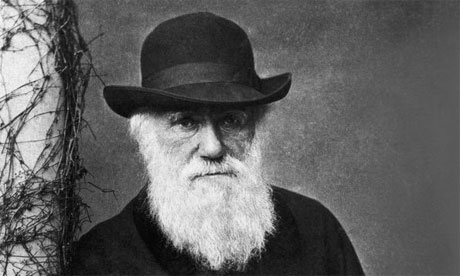
Charles Darwin had a big idea, arguably the most powerful idea ever. And like all the best ideas it is beguilingly simple. In fact, it is so staggeringly elementary, so blindingly obvious that although others before him tinkered nearby, nobody thought to look for it in the right place.
Darwin had plenty of other good ideas - for example his ingenious and largely correct theory of how coral reefs form -
but it is his big idea of natural selection, published in On the Origin of Species, that gave biology its guiding principle, a governing law that helps the rest make sense.
Understanding its cold, beautiful logic is a must.
Natural selection's explanatory power is not just about life on this planet: it is the only theory so far suggested that could, even in principle, explain life on any planet. If life exists elsewhere in the universe - and my tentative bet is that it does - some version of evolution by natural selection will almost certainly turn out to underlie its existence. Darwin's theory works equally well no matter how strange and alien and weird that extraterrestrial life may be - and my tentative bet is that it will be weird beyond imagining.
Explanation ratio
But what makes natural selection so special? A powerful idea assumes little to explain much. It does lots of explanatory "heavy lifting", while expending little in the way of assumptions or postulations. It gives you plenty of bangs for your explanatory buck. Its Explanation Ratio - what it explains, divided by what it needs to assume in order to do the explaining - is large.
If any reader knows of an idea that has a larger explanation ratio than Darwin's, let's hear it.
Darwin's big idea explains all of life and its consequences, and that means everything that possesses more than minimal complexity. That's the numerator of the explanation ratio, and it is huge.
Yet the denominator in the explanatory equation is spectacularly small and simple: natural selection, the non-random survival of genes in gene pools (to put it in neo-Darwinian terms rather than Darwin's own).
You can pare Darwin's big idea down to a single sentence (again, this is a modern way of putting it, not quite Darwin's):
"Given sufficient time, the non-random survival of hereditary entities (which occasionally miscopy) will generate complexity, diversity, beauty, and an illusion of design so persuasive that it is almost impossible to distinguish from deliberate intelligent design."I have put "which occasionally miscopy" in brackets because mistakes are inevitable in any copying process. We don't need to add mutation to our assumptions. Mutational "bucks" are provided free. "Given sufficient time" is not a problem either - except for human minds struggling to take on board the terrifying magnitude of geological time.
A certain kind of mind
It is mainly its power to simulate the illusion of design that makes Darwin's big idea seem threatening to a certain kind of mind. The same power constitutes the most formidable barrier to understanding it. People are naturally incredulous that anything so simple could explain so much.
To a naive observer of the wondrous complexity of life, it just must have been intelligently designed.
But intelligent design (ID) is the polar opposite of a powerful theory: its explanation ratio is pathetic. The numerator is the same as Darwin's: everything we know about life and its prodigious complexity. But the denominator, far from Darwin's pristine and minimalist simplicity, is at least as big as the numerator itself: an unexplained intelligence big enough to be capable of designing all the complexity we are trying to explain in the first place!
Here may lie the answer to a nagging puzzle in the history of ideas. After Newton's brilliant synthesis of physics, why did it take nearly 200 years for Darwin to arrive on the scene? Newton's achievement seems so much harder! Maybe the answer is that Darwin's eventual solution to the riddle of life is so apparently facile.
Claims to priority were made on behalf of others, and by Patrick Matthew in the appendix to his work On Naval Timber, as was punctiliously acknowledged by Darwin in later editions of the Origin. However, although Matthew understood the principle of natural selection, it is not clear that he understood its power. Unlike Darwin and Alfred Russel Wallace, who hit on natural selection independently, prompting Darwin to publish his theory, Matthew seems to have seen selection as a purely negative, weeding-out force, not the driving force of all life. Indeed, he thought natural selection so obvious as to need no positive discovery at all.
Garbled versions
Although Darwin's theory can be applied to much beyond the evolution of organic life, I want to counsel against a different sense of Universal Darwinism. This is the uncritical dragging of some garbled version of natural selection into every available field of human discourse, whether it is appropriate or not.
Maybe the "fittest" firms survive in the marketplace of commerce, or the fittest theories survive in the scientific marketplace, but we should at very least be cautious before we get carried away. And of course there was Social Darwinism, culminating in the obscenity of Hitlerism.
Less obnoxious but still intellectually unhelpful is the loose and uncritical way in which amateur biologists apply selection at inappropriate levels in the hierarchy of life. "Survival of the fittest species, extinction of poorly adapted species" sounds superficially like natural selection, but the apparent resemblance is positively misleading.
As Darwin himself was at pains to point out, natural selection is all about differential survival within species, not between them.
I'll end on a subtler legacy of Darwin's big idea.
Darwin raises our consciousness to the sinewy power of science to explain the large and complex in terms of the small and simple. In biology we were fooled for centuries into thinking that extravagant complexity in nature needs an extravagantly complex explanation. Darwin triumphantly dispelled that delusion.
There remain deep questions, in physics and cosmology, that await their Darwin. Why are the laws of physics the way they are? Why are there laws at all? Why is there a universe at all? Once again, the lure of "design" is tempting. But we have the cautionary tale of Darwin before us. We've been through all that before. Darwin emboldens us - difficult as it is - to seek genuine explanations: explanations that explain more than they postulate.
Richard Dawkin FRS is the Charles Simonyi Professor of the Public Understanding of Science at Oxford. His latest book is The God Delusion
We the undersigned petition the Prime Minister to Remove Charles Darwin from being considered a respected individual. More details
Submitted by ELIZABETH FISHER
1. Remove the picture of the extremely racist Charles Darwin from the £10 note AND 2. If this country is not a racist country, let us rid ourselves of the religious (firmly held belief) filth of Darwins teachings! Do not teach his arrogant and UNSCIENTIFIC theology (his god was himself) in our schools and misname it as "science." If we teach Evolution, we should teach other (and more plauseable possibilities - i.e. Intelligen Design) beliefs.
Let us not forget that "race" is a made-up concept anyway. We should run away at full speed from any thing that has encouraged the actions of Adolf Hitler!
This petition has been rejected because:
Additional information about this rejection:
reposted from: PM - Petition REJECTED!
my: highlights / emphasis / key points / comments

